IGD worked alongside long-standing Irish distributor and partner Shorcontrol to provide a fixed gas detection solution for Gas Networks Ireland’s Network Innovation Centre. Gas Networks Ireland operates Ireland’s national gas network, with its Innovation Centre supporting research, testing and training involving natural gas, hydrogen and hydrogen blends. The facility required a hydrogen gas detection system capable of providing reliable monitoring and actionable data across a range of internal and external environments, covering hydrogen, methane and combustion by-products including carbon monoxide. IGD supplied the addressable fixed gas detection system, with Shorcontrol committing to maintenance and any future expansion requirements. However, the unusual layout of the facility meant conventional detector positioning wasn’t always practical.
Project Snapshot
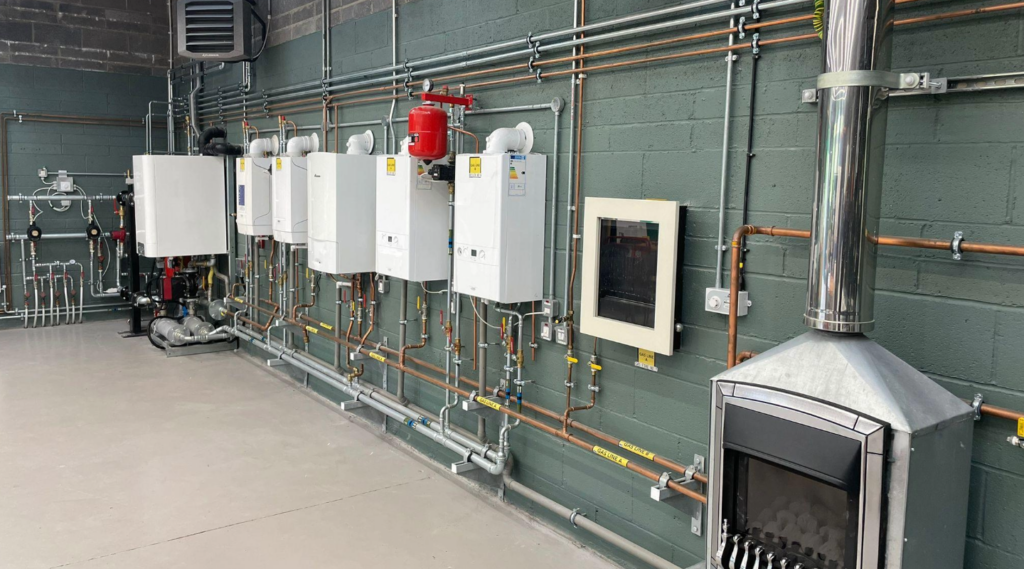
Inside Gas Networks Ireland’s Network Innovation Centre
Gas Networks Ireland’s Network Innovation Centre provides engineers with a dedicated environment to research and test the role hydrogen could play within Ireland’s future gas network. This includes investigating how different blends of hydrogen and natural gas perform when used with conventional gas appliances, such as domestic boilers and cookers.
By testing increasing hydrogen concentrations alongside natural gas, engineers can assess how existing appliances and infrastructure respond, helping identify where hydrogen could be introduced while maintaining safe, effective operation. As hydrogen produces no carbon dioxide at the point of combustion, increasing its proportion within the gas mix also offers a potential route towards reducing the carbon intensity of gas used for heating.
But working with different gas blends also introduces different safety considerations. How do you reliably monitor a facility designed to work with gases that present very different detection requirements?
Monitoring Hydrogen, Methane and Carbon Monoxide in one Facility
The challenge presented by the Innovation Centre wasn’t simply the range of gas hazards, but the different environments in which those gases needed to be monitored. Gas behaviour, potential leak sources and the practicalities of detector positioning all had to be considered when designing the system.
A detailed site survey allowed the project team to assess each environment individually and determine the most appropriate detection method.
Hydrogen (H₂)
An extremely flammable, lighter-than-air gas that can present a serious fire and explosion hazard if allowed to accumulate. When used as a fuel, it produces water rather than carbon dioxide at the point of combustion, making it an important area of research in the transition towards lower-carbon energy.
At the Innovation Centre, hydrogen is supplied from high-pressure cylinders housed within a dedicated external compound. A manifold and pipework allow controlled quantities to enter the testing areas, where hydrogen can be blended with natural gas. Detection was therefore required around both the external infrastructure and internal testing environment.
Methane (CH₄)
The highly flammable, primary component of natural gas. The centre’s mains natural gas supply allows engineers to combine natural gas with controlled proportions of hydrogen before testing the resulting blends with conventional appliances.
Potential methane leaks therefore needed to be monitored within the testing environment alongside hydrogen, with detector positioning accounting for the behaviour of both gases.
Carbon Monoxide (CO)
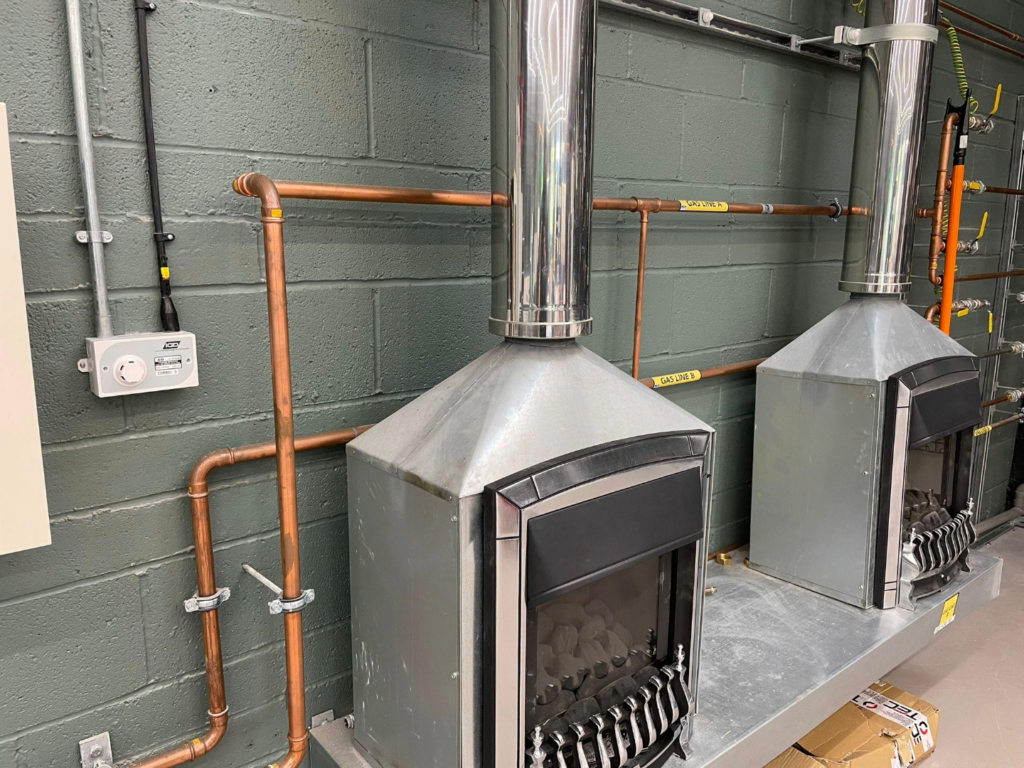
A toxic hazard produced through incomplete combustion. With boilers and other gas appliances operating during testing, safe-area CO detection was required around relevant internal areas, including beneath the boiler flues.
Together, these hazards required more than simply selecting the right detectors and sensors. The system had to account for where each gas could escape, how it would behave following a leak and where detection could practically be installed and maintained.
Gas Detection Regulations and Safety Requirements
In Ireland, hazardous gases and potentially explosive atmospheres are governed by the Chemical Agents Regulations and Part 8 of the Safety, Health and Welfare at Work (General Application) Regulations 2007, alongside ATEX requirements for equipment used in hazardous areas. Similar frameworks exist internationally, including COSHH and DSEAR in the UK, reinforcing the need to assess gas risks and implement appropriate measures to detect and control them.
Meeting these requirements begins with understanding not only which gases are present, but where they could escape, how they would behave and where detection can practically be installed and maintained.
If you want to see a full breakdown of the laws and regulations surrounding gas detection, check out our article.↗
Using Sampling Detectors to Gas Detection Monitor Hydrogen at Ceiling Level
The initial system design proposed Safe Area detectors at the top of the facility’s ceiling, providing high-level detection for hydrogen or methane released within the testing area. However, the site survey identified a practical challenge. Roof trusses significantly restricted access to the highest points of the building, making installation difficult and requiring extensive high-level cable runs.
Accessibility also had to be considered beyond the initial installation. Positioning detectors amongst the roof trusses would make future calibration and maintenance unnecessarily difficult, so the project team decided to reassess the original design.
Working alongside Shorcontrol, our engineers proposed an alternative approach using TOC-750S Samplers and sampling lines. As hydrogen is significantly lighter than air and rises rapidly following a leak, the sampling lines could be extended to the high-level areas where escaping gas would be expected to accumulate, while the samplers themselves remained in accessible locations.
This allowed the required areas to be effectively monitored while simplifying installation, reducing high-level cabling and providing easier access for ongoing calibration and maintenance.
ATEX Hydrogen Detection for the External Storage Compound
Hydrogen monitoring was also required outside the Innovation Centre. Rather than receiving a piped hydrogen supply, the facility stores high-pressure cylinders within a dedicated external compound, with a manifold and associated connections used to supply hydrogen to the internal testing areas.
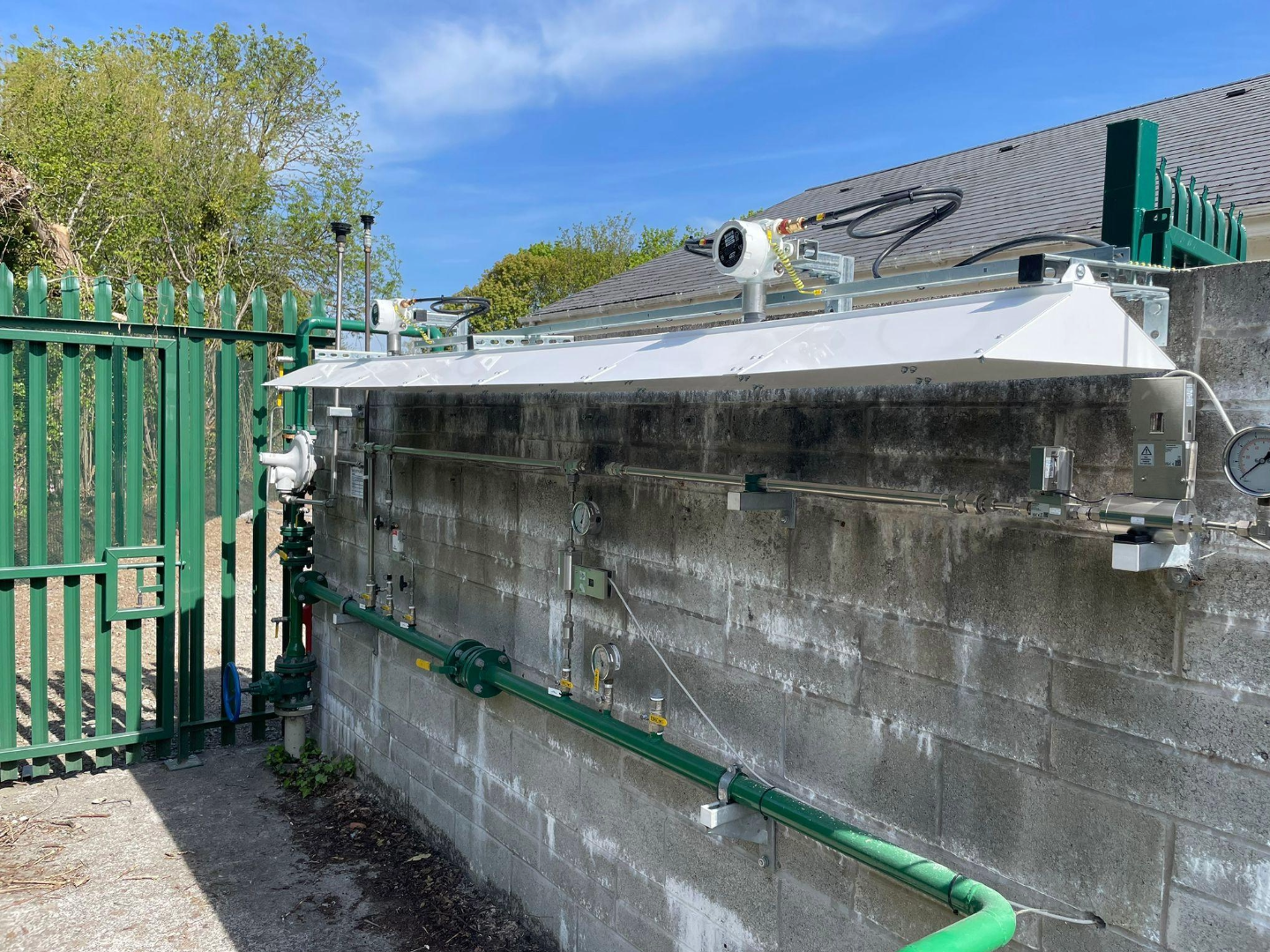
With joints, connections and pipework creating potential leak points around the manifold, the external compound required its own approach to hydrogen leak detection. ATEX-rated TOC-750X detectors were selected to provide continuous monitoring within the hazardous area.
To further improve coverage, IGD gas collector hoods were positioned above the hydrogen manifold. As hydrogen rises rapidly when released, the canopies help collect and direct escaping gas towards the detector, increasing the area from which a potential leak can be captured.
This provided a dedicated hazardous-area gas detection solution for the external hydrogen supply while integrating with the wider system protecting the facility.
Potentially explosive atmospheres require a dedicated approach to gas detection. You can read more about how we deliver ATEX-rated solutions in our complete guide↗
Internal Methane and Carbon Monoxide Detection
Alongside high-level gas sampling, TOC-750 Safe Area detectors provide point detection across the Innovation Centre’s internal testing areas. For methane monitoring, detectors fitted with IGD’s Mk8 pellistor sensor technology provide reliable detection with an extended 5-year operational lifetime, helping to reduce ongoing maintenance and sensor replacement requirements.
Carbon monoxide is also monitored around the engineering and testing apparatus, where CO can occur as a by-product of incomplete combustion during appliance testing. TOC-750 Safe Area detectors provide continuous monitoring in these locations, ensuring that both flammable and toxic gas risks are covered as part of the wider fixed gas detection system.
Bringing It All Together with Sentinel+
While each area presented different monitoring requirements, the individual detection methods form part of a single Sentinel+ fixed gas detection system.
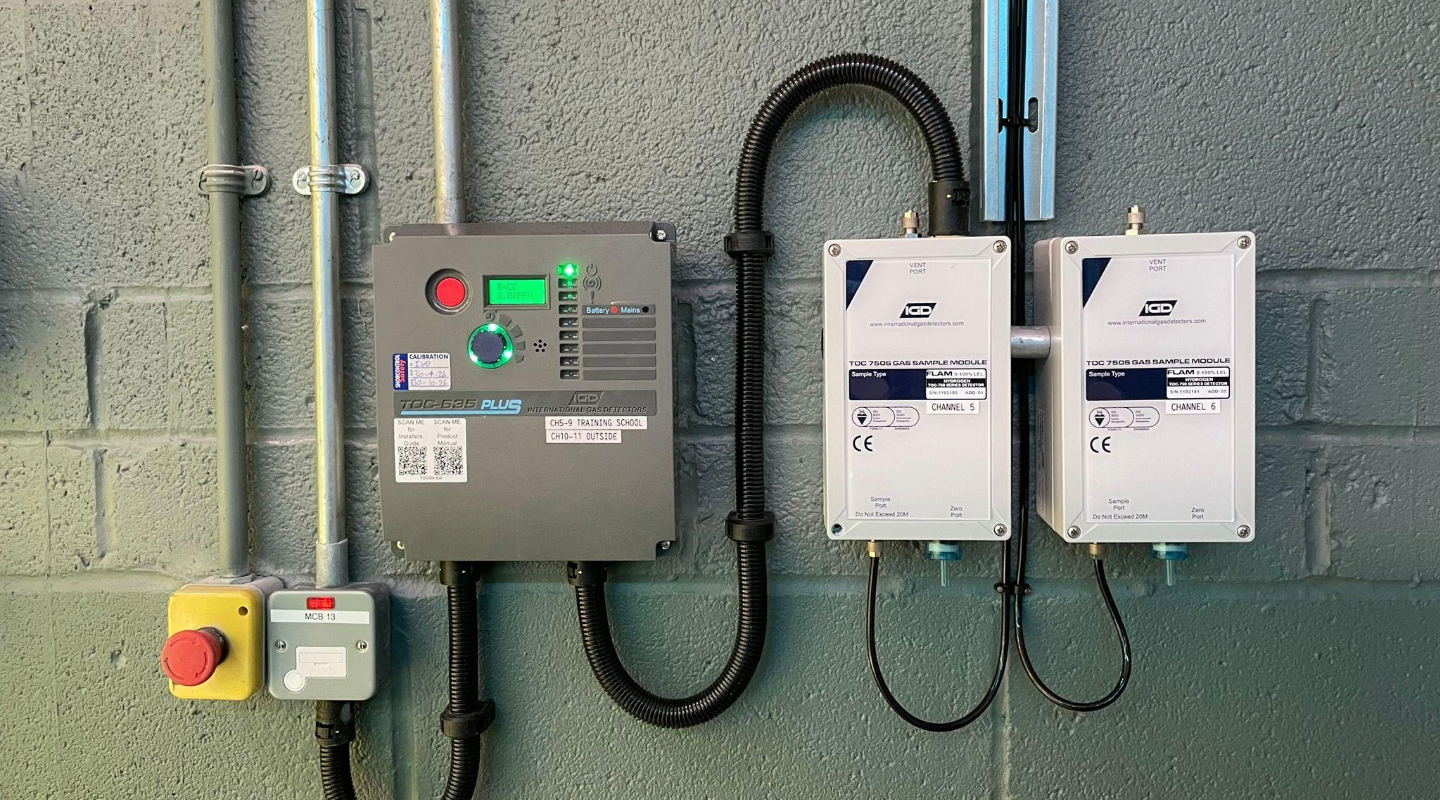
A TOC-635 Plus Control Panel provides a central hub, powering the Sentinel+ system, with TOC-750 Samplers used for high-level hydrogen and methane detection, TOC-750X detectors protecting the external hydrogen compound, and TOC-750 Safe Area detectors monitoring for carbon monoxide around the internal boiler and appliance areas.
Sentinel+ is IGD’s exclusive Addressable Gas detection system. Both power and comms are handled by a single 2-wire cable, reducing installation cost and time, and simplifying future maintenance. Sentinel+ also provides the facility with auto system setup, detailed event logs and actionable data the team needs to make smarter decisions and bolster compliance.
Sentinel+’s addressable architecture and modular system setup allow these different detection technologies to operate as part of one integrated system. This gave the Innovation Centre the flexibility to apply the most appropriate detection method to each environment without creating separate systems for individual hazards or areas. The result is a Methane and hydrogen gas detection system that extends across both safe and hazardous areas, combining point detection and remote gas sampling within a single, centrally monitored solution.
Read our article to see how Sentinel+ can ensure you’re not paying too much for gas detection. ↗
IGD and Shorcontrol: A Safety Partnership
What stands out with IGD is how simple the systems are. For a facility like this, where the system will also be demonstrated to engineers, it needed to be straightforward to understand and use.
IGD and Shorcontrol have worked together on gas detection projects across Ireland for a number of years, and the Innovation Centre presented us with a chance to collaborate again on a unique project.
Having worked extensively with IGD technology, Shorcontrol highlighted the simplicity of our systems as one of the key reasons for selecting IGD for the project. This was particularly important at the Innovation Centre, where the installed gas detection system will itself be used as a reference point for engineers undergoing training at the facility.
The project also demonstrates the value of combining local installation expertise with direct access to IGD’s technical team. As the requirements evolved following the initial site survey, the system design could be adapted around the practical challenges of the facility, while Shorcontrol managed the installation and commissioning on site.
That relationship will continue beyond installation, with our Aftercare+ service providing ongoing calibration and maintenance forming part of the system’s operational life.
Protecting the Future of Gas Research and Training
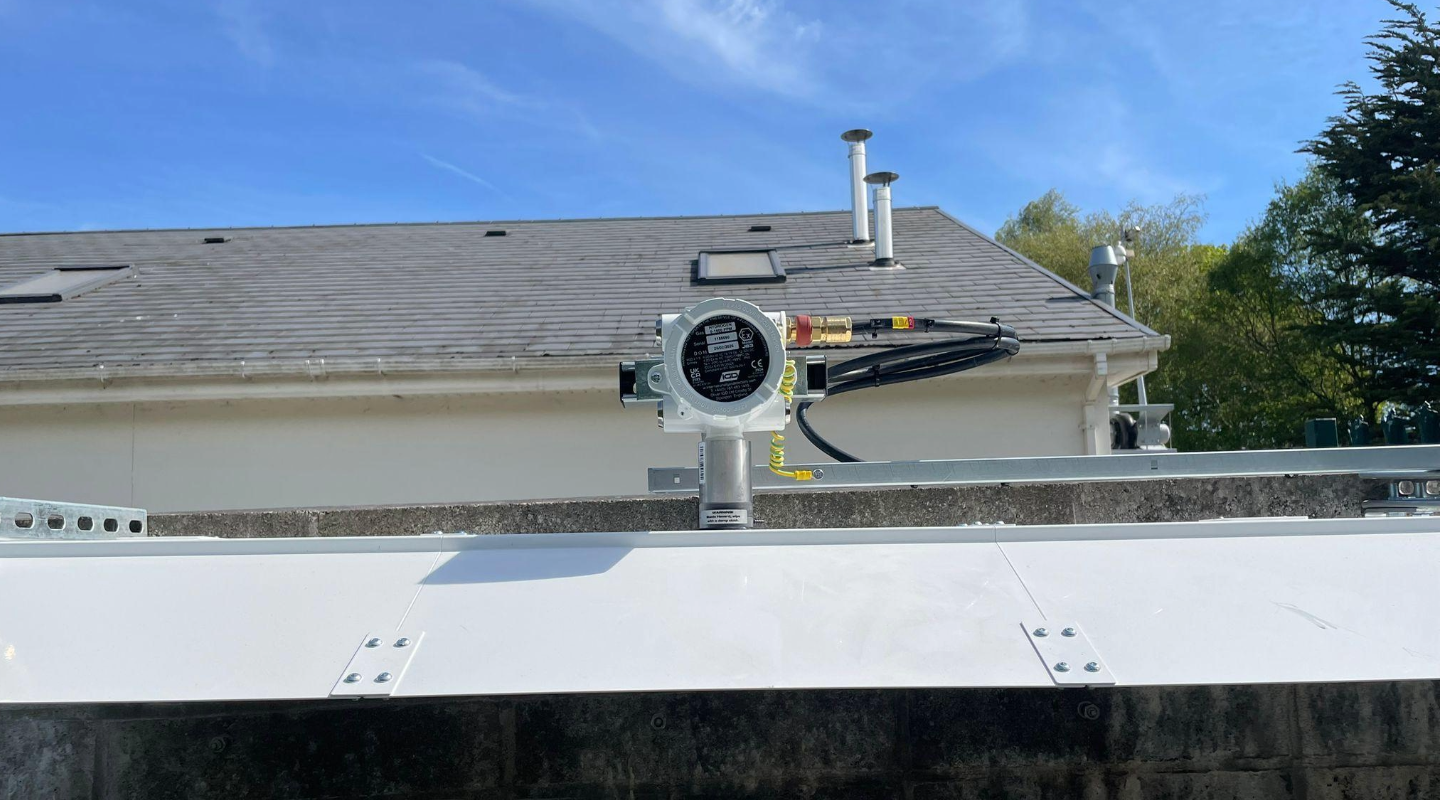
With installation and commissioning complete, the Sentinel+ system now provides continuous gas monitoring across the Network Innovation Centre’s internal testing areas and external hydrogen compound.
Shorcontrol reports that Gas Networks Ireland has been very happy with the completed installation. As engineers pass through the centre for training, the system also provides a working example of fixed gas detection in an environment where hydrogen, natural gas and conventional appliances are brought together for research and testing.
Finding the Right Solution
The Network Innovation Centre demonstrates why effective gas detection must start with understanding the application. Even within a single facility, different gases, environments and physical constraints can demand very different approaches to detection.
For Gas Networks Ireland, that meant combining remote gas sampling, safe-area point detection and ATEX-rated hydrogen monitoring within one integrated Sentinel+ system. For another facility, those requirements could be entirely different.
That’s why every IGD project begins by considering the specific hazards, environment and operational requirements involved. From initial site survey and system design through to commissioning, calibration and ongoing support, we can help develop a hydrogen gas detection system built around the realities of your application.
Planning a Hydrogen Gas Detection Project?
Whether you’re developing a hydrogen research facility, introducing hydrogen into an existing process or need to monitor hydrogen storage and distribution infrastructure, our team can help deliver a digital system that offers the right gas detection measures for your facility, regardless of changes in the environment.
For our complete guide to hydrogen gas detection, check out our brochure. ↗


