A £735,000 settlement has been reached in a landmark legal case involving 121 NHS maternity staff, including 85 midwives, exposed to dangerous levels of nitrous oxide at Basildon University Hospital in Essex. The case follows excessive nitrous oxide exposure identified during routine air quality testing in June 2021, with affected staff reporting symptoms including anxiety, fatigue and “brain fog”. This represents the largest group legal action ever brought by midwives in the UK, serving as a reminder of the importance of implementing effective nitrous oxide monitoring measures across all appropriate medical environments.
Nitrous oxide (N2O), commonly administered as Entonox or laughing gas, is used to relieve pain during childbirth. While intermittent use is considered safe for patients, prolonged occupational exposure presents serious health risks. Between 2021 and 2023, maternity staff were reportedly exposed to nitrous oxide at levels reaching up to 30 times the legal workplace limit, highlighting the importance of understanding occupational exposure over time.
N2O is a colourless, toxic gas that only has a faint smell, making it incredibly difficult to detect without suitable equipment. The case raises an important question for healthcare facilities: how can potentially hazardous nitrous oxide concentrations be identified and addressed before prolonged exposure puts staff at risk?
In this article, we’ll be exploring how fixed detection, historical monitoring data, ventilation performance and portable detection can help healthcare facilities identify and manage similar hazards.

What happened at Basildon Hospital?
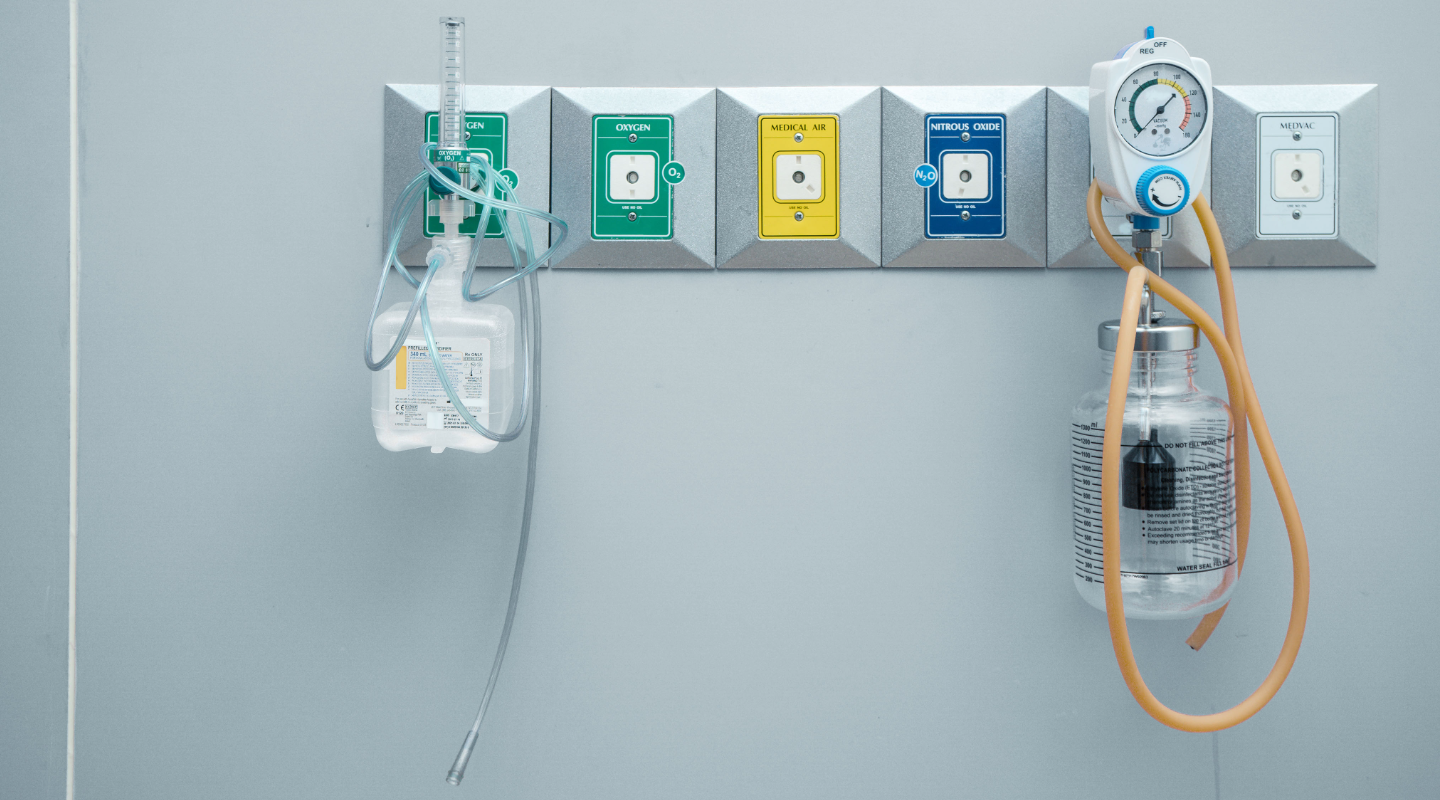
Entonox, composed of 50% Nitrous Oxide and 50% Oxygen, is administered through a mouthpiece or facemask. However, nitrous oxide can escape into the surrounding environment when patients exhale, when equipment is disconnected or leaking, or when the gas is not adequately captured and removed. At Basildon, the Royal College of Midwives (RCM) has identified that both poor ventilation and leaking gas lines and equipment were factors contributing to excessive occupational exposure.
Routine air quality testing carried out in June 2021 identified excessive nitrous oxide exposure, with an internal hospital report noting exposure reaching 30 times the legal limit for some staff. It’s important to note that this is a comparison with the applicable occupational exposure limit set by the HSE, and not proof that the atmosphere remained at that concentration continuously.
Staff were not informed of the results until October 2022, approximately 16 months after the testing took place. The delay meant that evidence of excessive exposure had been available for more than a year before the findings were communicated to those affected.
In 2023, measures to reduce exposure were introduced, including improvements to the ventilation and advice on how staff breaks can interrupt exposure. The trust subsequently admitted to exposing staff to dangerously high levels of nitrous oxide, but the scale of the exposure only becomes clear when we examine how nitrous oxide concentrations are measured and what workplace exposure limits actually mean.
What is the workplace exposure limit for Nitrous Oxide?
Any medical environment that uses N2O can carry the risk of repeated occupational exposure. This includes everything from maternity wards to dental surgeries to operating theatres. The HSE warns that excessive exposure can interfere with the body’s use of vitamin B12, potentially contributing to neurological problems and anaemia, so even though it has an important clinical role, it must be closely monitored.
Parts per million is a way of expressing the concentration of a substance in air. For gases, 100 ppm means approximately 100 parts of the gas in every million parts of the air mixture, by volume. In the simplest terms: 100 ppm = 0.01% by volume. Although 100 ppm represents just 0.01% of the air by volume, occupational exposure limits are designed to account for health risks associated with exposure over time. In the UK, the Health and Safety Executive (HSE) sets the workplace exposure limit for nitrous oxide at 100 parts per million (ppm), measured as an eight-hour time-weighted average (TWA). This means that exposure is assessed according to both the concentration of nitrous oxide in the air and the length of time a person is exposed to it.
For example:
A member of staff exposed to 40 ppm for four hours and 160 ppm for another four hours would have an eight-hour TWA of 100 ppm. Although the concentration exceeded 100 ppm for half their shift, their average exposure would equal the workplace limit. An individual reading above 100 ppm does not therefore automatically constitute a breach of the eight-hour limit.
This distinction is particularly important in healthcare environments, where staff may work extended shifts, move between different rooms and encounter changing concentrations throughout the day. Accurately assessing their exposure requires an understanding of these working patterns, as relying on isolated measurements is not sufficient. It should be noted that exposure limits vary by region, with the current 8hr TWA for N2O set at 25ppm in the United States.
The internal report’s reference to exposure levels reaching up to 30 times the legal UK workplace limit demonstrates the seriousness of the incident.
How Fixed Nitrous Oxide Monitoring Helps Identify Gas Hazards
One established method of assessing occupational nitrous oxide exposure is through passive dosimeters: small devices worn by staff during their shifts, which collect samples for subsequent laboratory analysis. While dosimeters can provide valuable information about individual exposure, their reliance on retrospective analysis presents a significant limitation. Results are not available immediately, meaning that potentially hazardous exposure may continue before a problem is identified. They present another issue: passive dosimeters cannot provide an immediate warning when gas concentrations rise.
Fixed gas detection systems provide continuous monitoring of nitrous oxide concentrations at designated locations throughout a facility. Unlike passive sampling methods, fixed detectors can activate audible and visual alarms as soon as concentrations reach predetermined thresholds, allowing staff to investigate and take appropriate action.
IGD’s Sentinel+ addressable systems can also be integrated with compatible ventilation or building management systems, allowing gas concentration readings to inform automated responses.
For healthcare environments, IGD’s TOC-750S sampler gas detector provides a practical and discreet solution. The system uses tubing to draw air from a monitored area to a remotely positioned detector, allowing sampling points to be installed inside maternity wards while the equipment itself remains in an accessible location, such as a corridor. With sampling distances of up to 20 metres, near-silent operation and virtually no moving pump components, this arrangement minimises disruption to patients and staff while simplifying routine maintenance.
The TOC-750S combines the latest sensor technology with IGD’s sampling design and Sentinel+ communication to deliver accurate, targeted nitrous oxide monitoring. As the world’s only fixed N₂O sampling detector capable of reliably measuring low-level concentrations without interference from CO₂, it offers a measurement range of 0–1,000 ppm with a resolution of 1 ppm.
However, while fixed detection provides immediate warnings when configured alarm thresholds are reached, its value extends beyond individual alarm events. Continuous monitoring also generates data that can be used to investigate potential exposure over longer periods, provided there is a means of storing and analysing that data. That’s where GasNetTM comes in.

Event Logging & Data Trending: Why Long-Term Nitrous Oxide Monitoring Matters
While fixed gas detection systems provide immediate warnings when concentrations reach predetermined thresholds, they can also generate valuable information about how those concentrations change over time. A detector may repeatedly record elevated nitrous oxide concentrations without activating an alarm if those levels do not breach the occupational exposure limits, but identifying recurring patterns can help facilities investigate potential problems.
For example, a maternity ward might consistently record background concentrations of 50–75 ppm. Reviewing this data could help establish whether concentrations increase during Entonox administration, return to normal afterwards or remain elevated when the gas is no longer in use. This could allow staff to identify a small leak or ineffective ventilation or scavenging systems.
IGD’s GasNet remote monitoring platform provides a means of accessing and analysing this information. Working alongside Sentinel+ addressable gas detection systems, GasNet allows authorised personnel to view live readings, examine historical concentration trends and review alarm and fault events remotely. The platform also supports email and SMS notifications, helping ensure that relevant personnel are made aware of detected problems without needing to attend the control panel or even be on site.
For healthcare facilities, historical monitoring data can support investigations into suspected leaks, recurring exposure concerns and changes in ventilation performance. It can also help assess whether maintenance or corrective measures have resulted in lower gas concentrations.
The Basildon case demonstrates why access to this information matters. Routine testing identified excessive nitrous oxide exposure in June 2021, yet the findings were not communicated to affected staff until October 2022.
The Trust’s subsequent independent review identified weaknesses in governance processes that contributed to the failure to act on the original report. Accessible data and automated notifications can support faster identification, communication and investigation of potential hazards.
How Can Hospitals Verify That Nitrous Oxide Ventilation and Scavenging Systems Are Working?
Effective ventilation and scavenging are essential to managing occupational nitrous oxide exposure in healthcare environments.
Scavenging systems capture waste gas before it disperses into the surrounding atmosphere, while ventilation systems remove or dilute gas that has already entered the room. However, the presence of this equipment does not necessarily mean that nitrous oxide concentrations are being adequately controlled.
Recognising these challenges, NHS England published guidance in March 2023 on minimising occupational nitrous oxide exposure. This identifies a minimum ventilation rate of 10 air changes per hour for rooms where gas and air is administered as an analgesic, alongside appropriate scavenging arrangements and regular equipment checks.
The guidance also recommends annual validation of ventilation and scavenging systems, together with occupational exposure sampling to assess the effectiveness of existing controls. But one important question remains: how can you be sure these systems are working properly if you’re not monitoring for nitrous oxide?
Fixed nitrous oxide monitoring can provide additional information about conditions within a facility. By continuously measuring concentrations at designated sampling points, detection systems can identify unexpected increases and help facilities investigate potential ventilation problems.
Historical data is particularly useful following maintenance or changes to ventilation arrangements, allowing facilities to compare concentrations before and after corrective work.
At Basildon, the Royal College of Midwives identified poor ventilation and leaking gas lines and equipment as contributing factors. The case highlights the importance of ensuring that ventilation systems are not simply installed, but regularly checked and demonstrated to be effective.
The Role of Portable Gas Detection in Nitrous Oxide Exposure Monitoring
Although fixed detection systems provide continuous monitoring at designated locations, portable gas detectors offer additional flexibility when investigating potential nitrous oxide hazards.
Portable gas detectors can be used to investigate suspected leaks, check areas without permanent sampling points and assess changing concentrations during maintenance or inspections. They can also be worn by staff, providing information about the concentrations encountered as they move between different working environments.
The mPower POLI portable gas detector, available with a nitrous oxide sensor configuration, offers an option for facilities requiring portable detection alongside their fixed monitoring arrangements. However, individual concentration readings do not automatically establish a worker’s eight-hour time-weighted average exposure. Formal occupational exposure assessments require appropriate instruments and monitoring methods.
Fixed detection, portable monitoring, and historical data capture can therefore serve complementary roles in managing occupational nitrous oxide exposure.
Nitrous Oxide Monitoring and Workplace Safety Compliance
Under the Control of Substances Hazardous to Health (COSHH) Regulations, employers must assess and adequately control the risks associated with hazardous substances in the workplace.
For healthcare facilities using nitrous oxide, this means identifying potential exposure sources, implementing suitable control measures and ensuring those measures remain effective.
The HSE’s workplace exposure limit of 100 ppm, measured as an eight-hour time-weighted average, provides an important reference point. However, demonstrating adequate control requires appropriate exposure assessments rather than relying solely on individual gas concentration readings. NHS England’s guidance also emphasises regular exposure sampling, ventilation validation and reporting findings through appropriate clinical and health and safety channels.
The Basildon case illustrates why these reporting arrangements matter. The Trust’s independent review identified weaknesses in governance processes that contributed to the failure to act on the original air quality report.
Effective nitrous oxide monitoring must therefore be supported by clear responsibilities for reviewing results, investigating potential hazards and implementing corrective measures.
What Can Healthcare Facilities Learn from Basildon?
The Basildon settlement highlights the consequences of prolonged occupational nitrous oxide exposure and the importance of responding promptly when monitoring identifies a potential hazard.
Fixed gas detection, historical data analysis through GasNet, and portable monitoring can all help healthcare facilities identify and investigate elevated concentrations. However, these technologies must be supported by effective ventilation, appropriate exposure assessments and clear responsibilities for acting on the information they provide.
IGD offers a range of nitrous oxide monitoring solutions designed to support the identification and management of gas hazards in healthcare environments. We provide a comprehensive service from site surveys, gas detection system design and implementation strategies through to installation, maintenance and training via the IGD Academy, supporting you through the entire process.