The safe and responsible operation of industrial settings relies on the implementation and use of safety systems that are fit-for-purpose. Most people accept that fire and smoke detection must be managed through a certified, dedicated control panel that meets certain standards, such as BS EN54. People tend to pay closer attention to fire safety because fire systems are more familiar and better understood. The standards that govern them are widely recognised and generally better observed than those concerning the management of dangerous gases. But gas hazards need to be taken seriously.

Key Points
- Standalone detectors, when used in isolation, do not create a compliant gas detection system.
- A dedicated gas detection control panel is required to meet performance standards. BS EN 60079-29 defines how systems must operate.
- Connecting detectors directly to a BMS or PLC bypasses these requirements.
- Fire detection systems always rely on approved control panels, and gas detection should be treated with the same level of care and accountability.
- Sentinel is purpose-built and performance tested for gas detection.
Gas detection must be given the same level of consideration. You wouldn’t connect a fire detector to a system that was not specifically designed for fire safety. Yet this is a common approach with gas detection, where detectors are often linked to general building management systems or PLCs.
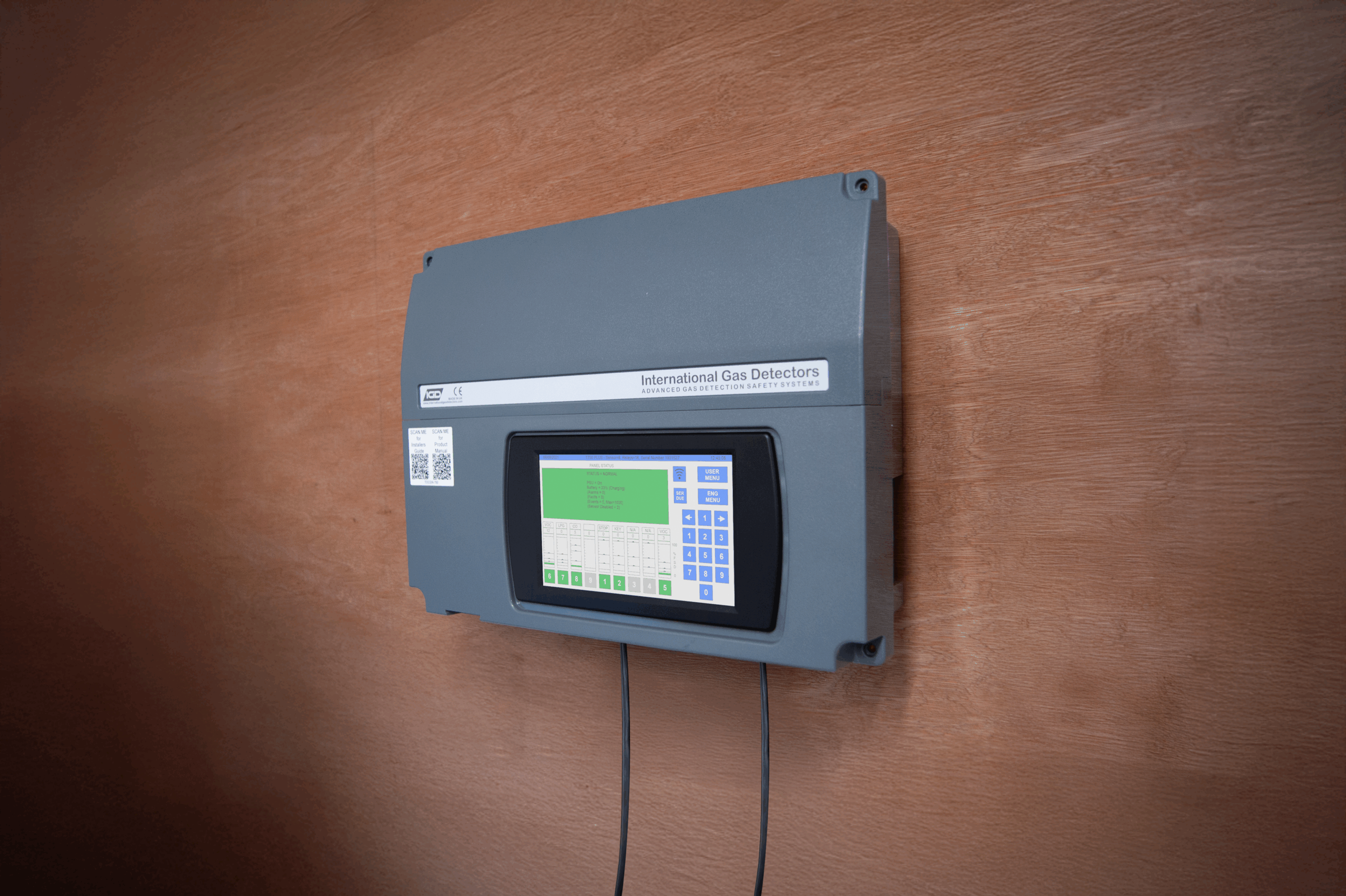
A dedicated gas detection control panel is designed to do the job properly. It provides clear visibility of system status, live alarms and alerts, and access to downloadable data logs. More importantly, it ensures the system delivers the performance, diagnostics and regulatory compliance required to manage hazardous gases and keep your staff safe.
Gas detection is non-negotiable
Hazardous gases, whether toxic, flammable or oxygen-depleting, pose serious risks to people, property and productivity. A proper gas detection system provides real-time monitoring, early warnings and a structured way to prevent serious incidents.
Regulators expect gas detection to be in place in any environment in which risk assessments have identified the presence of gas hazards, as many industrial environments rely on it to prevent fires, explosions, and exposure to toxic or asphyxiating atmospheres. Gas detectors aren’t just solo sensors. They’re part of an integrated, core safety system,
The problem with connecting detectors directly to a BMS or PLC
Many organisations buy standalone detectors, especially analogue 420mA devices, and connect them straight into a BMS or PLC. This creates several issues.
- The system is not performance tested for gas detection.
- You do not get complete data. Logging, diagnostics and historic readings are usually lost.
- Detectors may not be programmed correctly. A detector could be installed without an active alarm point, and you may never know.
- Faults may be invisible. Without proper supervision, the system might appear healthy even if a detector is offline.
- There is no design accountability. If you build your own hybrid system, you accept responsibility for its performance and compliance.
If you choose a dedicated gas detection control panel, the manufacturer takes on the design responsibility. If you plug detectors into a BMS, the responsibility becomes yours.

Standards and performance testing
Gas detection is governed by strict performance standards. The BS EN 60079 29 series outlines how detectors and control systems must operate, including requirements for accuracy, fault signalling, alarm behaviour and long-term reliability.
A dedicated gas detection control panel is designed and tested to meet these standards. A generic BMS or PLC is not. If a detector is wired directly to a BMS, the overall system cannot be considered compliant with the relevant gas detection performance standards.
A control panel also ensures correct system behaviour. It guarantees that every detector in the system has the correct alarm and fault settings. This level of consistency and dependability cannot be achieved by simply wiring detectors into an existing building system.
Data, diagnostics and proper system behaviour
A control panel collects live signals from multiple detectors, monitors their status and provides clear alarm and fault indications. It logs events, gas readings and diagnostic information that support maintenance and risk assessments.
Not having one means that you lose access to alarm visibility and historical data. You cannot guarantee that alarm thresholds have been applied correctly. In short, you lose the ability to manage gas detection as a safety system.
What a proper control panel provides
A dedicated gas detection control panel such as the Sentinel system offers key advantages that cannot be achieved through a BMS or PLC connection.
- Full compliance with the BS EN 60079 29 series of performance standards
- Clear alarm and fault indication for every detector
- Automatic alarm setup to prevent unconfigured detectors
- Real-time and historical data
- Proven reliability under temperature, humidity and electrical disturbance testing
- Third-party approval for both electrical safety and gas detection performance
- Correct design responsibility and documentation
The panel turns a group of detectors into a safety system. Without it, you simply have a few sensors reporting numbers with no assurance of behaviour or reliability.

Sentinel+: The Future of Gas Detection.Now.
Our Control Panels provide you with Sentinel+ Addressable technology. The concept is simple: power and communications are both handled by a single polarity-independent 2-wire cable utilising the only communications protocol specifically designed and optimised for gas detection.
Sentinel is purpose-built to provide the kind of data needed for an effective, compliant gas detection system. Sentinel+ was developed because existing digital systems still had limitations. Most required four wires. Two for power and two for communication. With polarity-dependent wiring across every termination point, there were many opportunities for installation errors.
Sentinel+ resolves that problem by using a two-core, polarity-independent cable for both power and communication. That means fewer cables, fewer terminations and much easier installation. It also means the system scales far more effectively.
Why Choose IGD?
If you are planning on implementing a gas detection system, a dedicated control panel is essential. Plugging detectors into a BMS or PLC may appear cheaper or simpler, but it limits compliance, reduces safety and shifts liability onto you.
A system such as Sentinel provides a fully approved, performance-tested and properly controlled solution. It can still integrate with wider systems where required, but it operates as a complete and reliable gas detection system in its own right.
Contact one of our team to see how a Sentinel+ Control Panel can protect your people today.